Parking & On-Airport Transport at WSI
6,259 spaces, free drop-off, EV charging, and a 10-bay bus interchange.
Last updated: 3 July 2026
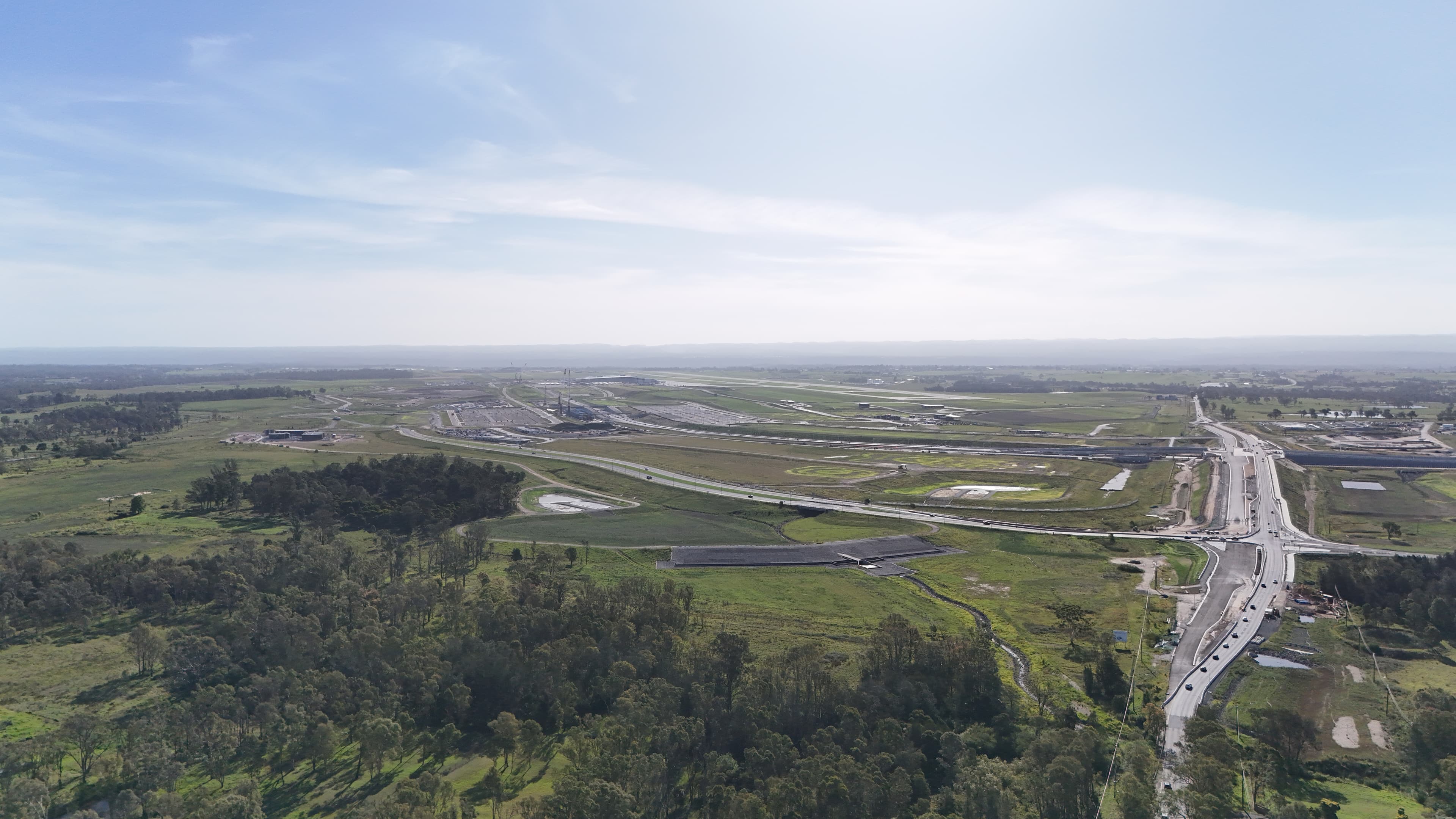
WSI opens in October 2026 with 6,259 parking spaces across four car parks — a generous allocation for an airport of this size at opening, with capacity forecast to roughly double to around 12,000 by 2045. The 290-metre terminal forecourt is designed for free drop-off. EV charging stations are confirmed. What isn't published yet: parking rates, charging prices, and how the kerbside zones will be delineated. WSA Co hasn't released those operational details as of April 2026. We'll update this page when they do. Here's what the Master Plan actually confirms.
Parking at WSI — 6,259 Spaces at Opening
Opening with 6,259 spaces across four car parks is genuinely generous for an airport at WSI's launch scale. The four car parks break into two broad categories. Multi-storey parking sits adjacent to the terminal — the kind you walk or shuttle to directly after landing. Longer-term and staff parking is located near Airport Business Park Metro Station, approximately two kilometres from the passenger terminal. That placement is deliberate: it's designed to encourage airport workers to arrive by Metro rather than drive to the terminal car park, reserving terminal spaces for passengers.
Parking capacity is forecast to grow to approximately 12,000 spaces by 2045 as the airport scales toward its long-term 10-million-passenger opening target and beyond.
WSA Co issued a request for expressions of interest from car park management operators in September 2024. No operator has been publicly confirmed and no parking tariffs have been announced as of April 2026. We'll update this section when rates are published — typically a few months before opening.
Source: WSA Co, Master Plan 2025–45 (endorsed May 2026), Part D.6 (pages 300–342)
Drop-Off and Pick-Up
The terminal forecourt runs 290 metres — longer than the equivalent at Sydney KSA's T1, which is a chronic congestion point. The design separates three types of traffic into dedicated lanes: a kerbside zone for active drop-offs and pick-ups, a search lane for vehicles circling while waiting, and a through lane for vehicles passing without stopping. In practice, this separation matters: at KSA, all three types of traffic share the same kerb, and the bottlenecks hit hardest when passengers are already stressed about making their flights.
Drop-off is free. That's confirmed in the Master Plan. Specific kerbside time limits haven't been published as of April 2026. Rideshare (Uber, Ola, DiDi) will be available, and the forecourt layout accommodates it. How rideshare pickups will be managed — whether via a PIN-based zone system like KSA uses, a designated zone map, or something else — hasn't been announced. Watch wsiairport.com.au closer to October 2026.
Source: WSA Co, Master Plan 2025–45 (endorsed May 2026), Part D.6 (pages 300–342)
EV Charging
Electric vehicle charging stations are confirmed as part of the WSI parking infrastructure. This aligns with the airport's sustainability direction — WSI is targeting 100% renewable energy across its operations, and including EV charging from day one is consistent with that. The bus fleet serving the airport at opening is also entirely electric.
The Master Plan confirms EV charging exists; it doesn't specify how many stalls, which network will operate them, or what AC/DC speeds will be available. Those details are likely to be confirmed alongside the car park operator announcement. If you're driving an EV to the airport, you can plan around charging being available — the question of cost and wait times will become clearer once the operator is named.
Source: WSA Co, Master Plan 2025–45 (endorsed May 2026), Part D.6 (pages 300–342)
Accessibility
WSI is a new purpose-built terminal, which means accessibility has been designed in from the start rather than retrofitted. Accessible parking bays, step-free drop-off access, and compliant terminal facilities will be required under the Disability Discrimination Act 1992 — this isn't optional, and a greenfield airport has no legacy constraints to work around.
The number of dedicated accessible bays, exact zone locations, companion card provisions, and NDIS-specific services haven't been published by WSA Co as of April 2026. These details typically emerge through the airport's accessibility planning documents and operator briefings closer to opening. We'll update this section when WSA Co publishes. If you have specific access requirements and need to plan ahead, contact WSA Co directly via wsiairport.com.au.
Getting Around the Airport Precinct
WSI's on-airport road network at opening covers 10.2 kilometres of vehicle road, 5.8 km of shared pedestrian and bicycle paths, and 1.6 km of dedicated bicycle lanes. Cargo and passenger vehicle routes are separated by design — heavy freight vehicles accessing the cargo precinct don't cross the passenger terminal approach roads. That separation matters during peak arrivals when aircraft, ground handlers, and terminal traffic all compete for the same roads at once.
The Master Plan's transport projections put personal vehicles at 90% of all airport trips at opening — car, taxi, and rideshare combined. That's consistent with comparable greenfield airports globally: Melbourne Airport, which has no rail connection, sits at roughly the same figure. WSI's long-term target is to bring that down to 69% by 2045 as the Metro matures and the bus network fills out. The parking design reflects that ambition — worker and long-term spaces pushed to the Metro station end of the precinct, terminal parking reserved for passengers making short trips.
Source: WSA Co, Master Plan 2025–45 (endorsed May 2026), Part D.6 (pages 300–342, Table D.28)
Car Rental at WSI
As at July 2026, no car rental company has publicly confirmed an on-airport desk at WSI. Don't assume the operators you know from Sydney Kingsford Smith (Hertz, Avis, Budget, Thrifty, Europcar and others) will automatically have a WSI location — that hasn't been announced either way. WSA Co is expected to name car park and rental operators closer to opening. We'll update this section as soon as an operator is confirmed.
Bus Interchange
The terminal is designed to accommodate up to 10 bus bays — enough capacity to absorb the five permanent routes launching at opening and leave room for more as passenger volumes build. Bus access is the primary public transport mode from October 2026 until the Sydney Metro opens in mid-to-late 2027.
Five permanent Transport for NSW bus routes start running on 5 July 2026 — three months before the first passenger flights, which means they initially serve the Bradfield development precinct before the airport itself opens. At opening, all five will serve the terminal:
- Route 772 — Mount Druitt to WSI via St Clair
- Route 790 — Penrith to WSI via Kingswood
- Route 825 — Liverpool to WSI via Bonnyrigg
- Route 845 — Campbelltown to WSI via Oran Park and Bradfield
- Route 860 — Liverpool to WSI via Leppington and Bradfield
All five run every 30 minutes, 5am–10pm, seven days a week. The entire fleet — 43 buses — is new and electric. For passengers connecting to the rail network, the free WSI Link shuttle runs every 30 minutes to St Marys station (T1 Western Line) from airport opening until the Metro opens mid-to-late 2027. Shuttle hours are 4:30am to midnight daily (until 1am on weekends). Note: Singapore Airlines flight SQ202 arrives after midnight — if that's your flight, the shuttle won't be running and you'll need rideshare or a taxi. Full schedules, route maps, and the shuttle timetable are covered in the Getting to WSI guide.
Sources: WSA Co, Master Plan 2025–45 (endorsed May 2026), Part D.6 (pages 316–320); Transport for NSW / nsw.gov.au (bus routes and WSI Link confirmed)